

I. What Is the Purchase of Property Formed in the Future?
Pursuant to Clause 5, Article 3 of the Law on Real Estate Business 2023: “Residential houses and construction works formed in the future are houses and construction works that are under construction or have not yet been accepted for operation in accordance with the law on construction.”
Accordingly, this type of asset has not yet been fully formed but is permitted to participate in transactions once statutory conditions are satisfied.
Purchasing real estate formed in the future offers many advantages to both developers and buyers. For developers, it serves as an important capital mobilization channel during project implementation. For buyers, the selling price is often lower than at the time of handover, and the progressive payment schedule helps reduce financial pressure.
However, alongside these advantages are significant potential legal risks that may result in substantial losses if buyers fail to conduct thorough due diligence before deciding to enter into a transaction. Projects may be delayed, fail to meet legal conditions, or involve developers lacking financial capacity, leading to disputes and damages for customers.
II. Common Risks
1. The Project Does Not Fully Satisfy Legal Conditions for Sale
Article 24 of the Law on Real Estate Business 2023 provides that residential property formed in the future is eligible to be put into business when:
- The residential house or construction work has commenced construction in accordance with construction laws;
- The developer possesses all required legal documentation of the project as prescribed by law. In the case of apartment buildings or mixed-use buildings with residential units, documents evidencing completion and acceptance of the foundation works in accordance with construction laws are required.
Prior to selling or entering into lease-purchase agreements for off-plan residential property, the project developer must issue a written notification to the provincial-level state authority in charge of real estate business confirming that the property is eligible for sale or lease-purchase.
In practice, however, many projects are “launched” for sale prematurely or advertised for capital mobilization before satisfying all legal conditions. This increases risks for buyers because such transactions may not be fully protected by law in the event of disputes.
2. Risk of Construction Delays and Late Handover
In many cases, developers with weak financial capacity or limited implementation experience may cause construction delays and breach their obligations to deliver housing to customers. In some instances, developers simultaneously implement multiple projects and use funds mobilized from the sale of off-plan properties in one project to finance another project. This also leads to delays in construction progress and apartment handover.
Given that the asset is incomplete at the time of transaction, buyers make payments according to construction progress, while ownership rights are only fully established upon handover of the apartment and completion of procedures for issuance of the Certificate. If the developer delays construction progress, buyers not only face prolonged waiting periods but also bear significant financial consequences such as continued bank loan interest payments, temporary rental costs, or loss of leasing opportunities.
3. Completed Property Does Not Conform to Initial Commitments
The situation where the completed property does not conform to initial commitments is one of the common causes of disputes between buyers and developers in off-plan apartment projects. Due to the nature of transactions being established before project completion, buyers primarily rely on the project’s legal documentation, approved designs, show units, marketing materials, and contractual commitments to make decisions. When the actual product handed over does not correspond to these contents, legal risks inevitably arise.
In principle, where the apartment handed over does not comply with agreed terms, the buyer has the right to request rectification, request a price reduction, claim compensation for damages, or even unilaterally terminate the contract if the breach is serious in accordance with the Civil Code. However, the practical protection of rights largely depends on the specificity and rigor of the terms in the sale and purchase contract.
Therefore, in off-plan apartment transactions, buyers should not rely solely on show units or marketing materials but must pay particular attention to contract appendices concerning handover standards, layout drawings, lists of materials, and mechanisms for handling discrepancies in area. Thorough review at the contract-signing stage constitutes an important foundation for limiting risks upon actual handover.
4. Risks Related to the Certificate of Ownership
Pursuant to Clause 3, Article 17 of the Law on Real Estate Business 2023: “Within 50 days from the date of handover of the residential house to the buyer or from the time the lessee-purchaser has fully paid the amount as agreed, the developer must submit an application dossier to the competent state authority for issuance of the Certificate of land use rights and ownership of assets attached to land in accordance with the land law to the buyer or lessee-purchaser, except where the buyer or lessee-purchaser voluntarily carries out the procedures for issuance of the Certificate.”
However, in practice, many projects are slow in completing overall legal documentation (acceptance, completion, additional financial obligations, etc.), resulting in buyers not being granted the Certificate within the prescribed time limit. Delays in carrying out procedures for issuance of the Certificate after handover continue to occur in many projects, causing the asset to lose liquidity and restricting its transfer and mortgage capability.
5. Financial Risks Arising from Capital Mobilization and Bank Loans Prior to Asset Formation
Buyers often obtain bank loans to make installment payments under the contract. As the project has not been completed and the asset has not yet been formed, buyers are still required to pay loan interest. This risk becomes particularly serious if the project is suspended, leaving buyers repaying bank debt without having any asset to use or mortgage.
Although regulations are already stringent, in practice many developers still seek ways to “circumvent the law” to mobilize capital early.
Common tactics include signing consultancy agreements, brokerage agreements, or reservation agreements instead of sale and purchase contracts; using multiple legal entities within the same ecosystem to collect money under the guise of “product consultancy” or “proof of financial capacity.”
When disputes arise, customers find it difficult to prove the relationship between the intermediary legal entity and the developer, leading to situations where “the money is lost and the house is not obtained.”
More sophisticatedly, in some cases developers disguise transactions as loan agreements (with the developer as borrower) or require customers to take bank loans (linked to the developer) to place deposits, placing buyers in a situation where they bear debt without having any asset in hand.
III. Conclusion and Recommendations
It can be seen that although Vietnam’s legal framework has tightened conditions for real estate business and strengthened mechanisms to protect buyers, risks cannot be completely eliminated if developers fail to strictly comply with legal requirements or if buyers lack prudence. In this context, verifying the project’s eligibility for sale, reviewing the land-related legal status, requiring a bank guarantee for the developer’s handover obligations, and carefully assessing the contents of the sale and purchase contract should be considered mandatory steps before making any payment decision.
Buyers should be particularly cautious when encountering the following signs:
- The contracting party is not the developer.
- The contract signed is not a sale and purchase contract but is titled “consultancy,” “reservation,” or “proof of financial demand.”
- The deposit amount is excessively high and resembles advance payment.
- Payment is required through an intermediary legal entity or under the form of service fees.
These constitute potential legal “traps” posing the risk that customers may not be protected by law in the event of disputes.
Purchasing real estate formed in the future is an inevitable trend but also entails numerous risks. The notion of “buying early to obtain a low price” may become a “risk trap” causing customers not only to lose money but also to incur additional debt. Therefore, instead of chasing low prices, buyers should remain vigilant and comply strictly with legal regulations to ensure legal safety and protect their long-term interests.
Thank you!
Featured Products for sale
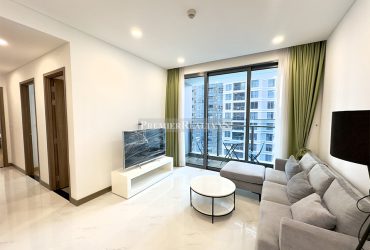
Sunwah Pearl apartment for sale, 2BRs+1 luxurious design, cheapest price on the market
90 Nguyen Huu Canh St., Ward 22, Binh Thanh Dist., HCMC.
| 107 m2 | 2+1 Bed(s) | 2 Bath(s) |
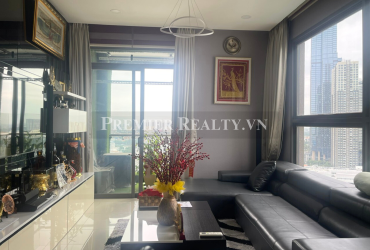
Own Pearl Plaza 3BRs apartment right now with extremely competitive price, full furnishing, corner views of harmonious river, stunning Landmark81, luxurious design
561A Dien Bien Phu Street, Ward 25, Binh Thanh District, Ho Chi Minh City
| 122 m2 | 3 Bed(s) | 2 Bath(s) |

Own right now Sunwah Pearl 3BRs apartment with very competitive price, views of stunning river, busy district 1, modern bathtub
90 Nguyen Huu Canh St., Ward 22, Binh Thanh Dist., HCMC.
| 128 m2 | 3 Bed(s) | 2 Bath(s) |

Immediately transfer Sunwah Pearl 3BRs apartment with very good price, views of airy river, modern Thu Thiem, minimal design, large area, available bathtub
90 Nguyen Huu Canh St., Ward 22, Binh Thanh Dist., HCMC.
| 128 m2 | 3 Bed(s) | 2 Bath(s) |
Featured Products for rent

Sunwah 1Br apartment for lease at super low price - High-class furniture - Central location
90 Nguyen Huu Canh St., Ward 22, Binh Thanh Dist., HCMC.
| 53 m2 | 1 Bed(s) | 1 Bath(s) |
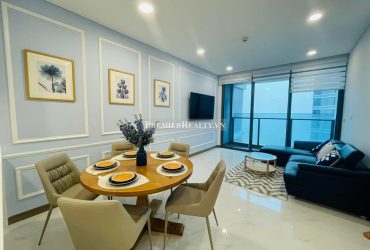
Sunwah Pearl apartment for rent with 2 bedrooms + 1, extremely large area, modern design, luxurious interior.
90 Nguyen Huu Canh St., Ward 22, Binh Thanh Dist., HCMC.
| 104 m2 | 2+1 Bed(s) | 2 Bath(s) |

Urgent lease Pearl Plaza 3BR apartment with very reasonable rental, views of cool swimming pool, airy Saigon River, large area, prime location
561A Dien Bien Phu Street, Ward 25, Binh Thanh District, Ho Chi Minh City
| 122 m2 | 3 Bed(s) | 2 Bath(s) |
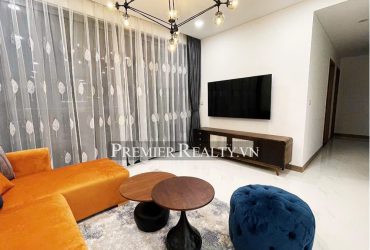
Explore right now Sunwah Pearl 3BRs with very good rental, views of airy river, modern Thu Thiem, minimal design
90 Nguyen Huu Canh St., Ward 22, Binh Thanh Dist., HCMC.
| 123 m2 | 3 Bed(s) | 2 Bath(s) |




 Website belongs to