

1. Legal basis for a property owner authorizing another person to sell the apartment when not in Vietnam
According to the provisions of the Civil Code 2015, an authorization contract is one of the lawful forms of representation in civil transactions.
Specifically, Article 562 of the Civil Code 2015 provides:
“An authorization contract is an agreement between the parties whereby the authorized party is obliged to perform tasks in the name of the authorizing party.”
Accordingly, the law allows an individual to act on behalf of the property owner to conduct civil transactions, including signing contracts related to property.
For housing transactions, the owner’s right to dispose of the property is guaranteed under the Law on Housing 2023, under which the property owner has the right to sell, donate, transfer, or authorize another person to exercise these rights in accordance with the law.
Specifically, Clause 1 Article 10 of the Law on Housing 2023 stipulates that homeowners have the right to:
“Sell, lease-purchase, donate, exchange, bequeath, mortgage, contribute capital with housing in accordance with the Law on Housing 2023, land law and other relevant laws; transfer housing sale contracts; lease, lend, allow residence, authorize housing management and other rights as prescribed by law; where housing is donated or inherited by persons who are not eligible to own housing in Vietnam, such persons may only receive the value of such housing.”
Therefore, if the property owner of the apartment is abroad, they may execute an authorization contract authorizing an individual in Vietnam to act on their behalf in selling the apartment.
2. Lawful form of authorization when the property owner is abroad
Under current law, there is no provision requiring that an authorization contract for selling a house must be notarized or authenticated. However, to ensure legal validity and avoid potential disputes, the parties should notarize the authorization contract.
Pursuant to Article 57 of the Law on Notarization 2024, if the authorizing party and the authorized party cannot attend the same notarial practice organization, the authorizing party may request a notary of a notarial practice organization of their choice to notarize the authorization request in the authorization contract. The authorized party may then request a notary of a notarial practice organization of their choice to notarize directly on the original authorization contract to confirm acceptance of the authorization, complete the notarization of the authorization contract, and send one original of the notarized document to the notarial practice organization where the authorizing party performed the notarization for record keeping.
In addition, Article 73 of the Law on Notarization 2024 provides that when the authorizing party is abroad and not present in Vietnam, diplomatic missions or consular missions of the Socialist Republic of Vietnam abroad may notarize wills, disclaimers of inheritance, authorization documents and other transactions in accordance with this Law and laws on consular and diplomatic affairs, except contracts for sale, exchange, transfer, donation, lease, mortgage, or capital contribution using real estate in Vietnam.
Accordingly, based on the above provisions, the procedure for authorizing another person in Vietnam to sell a house while the owner is abroad is conducted as follows:
(1) The authorizing party and the authorized party prepare an authorization contract.
(2) Notarization of the authorization contract: The authorizing party is abroad while the authorized party is in Vietnam, therefore notarization must be conducted in two different locations. The authorizing party may go to a Vietnamese diplomatic mission or consulate in the country of residence to notarize the authorization contract. After completion, the contract will be sent to Vietnam to the authorized party. The authorized party will then bring the contract to a notarial practice organization in the locality where they reside to complete the additional notarization.
(3) Once both notarization steps are completed, the authorization contract becomes legally valid. The authorized party may then conduct the property sale transaction with a third party within the scope of authorization stated in the contract.
3. Double taxation when transferring real estate through authorization
According to Official Dispatch No. 1133/TCT-TNCN (2011), the General Department of Taxation provided guidance on personal income tax related to real estate transfers as follows:
“Based on the above provisions, authorization for real estate transactions is a civil transaction permitted by law. However, if an individual with full civil capacity authorizes another individual who is not eligible for tax exemption under Clause 1 and Clause 4 Article 4 of the Law on Personal Income Tax to fully possess, manage, use, and dispose of their real estate, including leasing, lending, transferring, exchanging, donating, or mortgaging it, without the obligation to return the real estate to the authorizing party or the benefits obtained from the authorization, and the authorized party receives no remuneration, then such authorization is essentially a real estate purchase and sale. Therefore, the authorizing party must declare and pay personal income tax in accordance with the Law on Personal Income Tax.”
Accordingly, in this case the authorization will be subject to personal income tax if the following three conditions are met:
- The authorization is essentially a purchase and sale transaction, where the authorized party is granted full rights to possess, manage, use, and dispose of the apartment, including leasing, lending, transferring, exchanging, donating, or mortgaging it, and is not required to return the apartment.
- The transaction does not fall within tax-exempt cases, such as transfers between husband and wife; biological parents and children; adoptive parents and adopted children; parents-in-law and children-in-law; grandparents and grandchildren; or siblings. (Article 4 of the Law on Personal Income Tax 2007 (amended))
- The authorized party receives no remuneration.
In this case, the authorization is considered a purchase and sale contract. Therefore, the authorizing party must declare and pay personal income tax in accordance with the law.
If the authorized party uses this authorization contract to sell the apartment to another person, this will also be considered a purchase and sale transaction. Therefore, if the apartment is transferred through an authorization contract that in substance functions as a purchase and sale contract, personal income tax may be payable twice.
Conversely, if it can be proven that the authorization for selling the apartment is not in substance a purchase and sale transaction, the parties will not be required to pay personal income tax twice.
Thank you!
Featured Products for sale
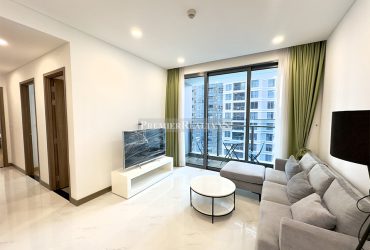
Sunwah Pearl apartment for sale, 2BRs+1 luxurious design, cheapest price on the market
90 Nguyen Huu Canh St., Ward 22, Binh Thanh Dist., HCMC.
| 107 m2 | 2+1 Bed(s) | 2 Bath(s) |
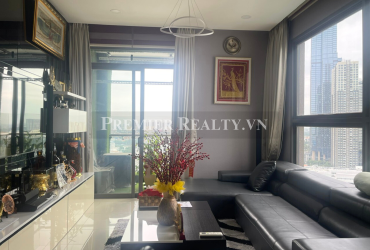
Own Pearl Plaza 3BRs apartment right now with extremely competitive price, full furnishing, corner views of harmonious river, stunning Landmark81, luxurious design
561A Dien Bien Phu Street, Ward 25, Binh Thanh District, Ho Chi Minh City
| 122 m2 | 3 Bed(s) | 2 Bath(s) |

Own right now Sunwah Pearl 3BRs apartment with very competitive price, views of stunning river, busy district 1, modern bathtub
90 Nguyen Huu Canh St., Ward 22, Binh Thanh Dist., HCMC.
| 128 m2 | 3 Bed(s) | 2 Bath(s) |

Immediately transfer Sunwah Pearl 3BRs apartment with very good price, views of airy river, modern Thu Thiem, minimal design, large area, available bathtub
90 Nguyen Huu Canh St., Ward 22, Binh Thanh Dist., HCMC.
| 128 m2 | 3 Bed(s) | 2 Bath(s) |
Featured Products for rent
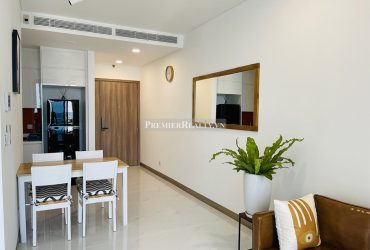
Sunwah 1Br apartment for lease at super low price - High-class furniture - Central location
90 Nguyen Huu Canh St., Ward 22, Binh Thanh Dist., HCMC.
| 53 m2 | 1 Bed(s) | 1 Bath(s) |
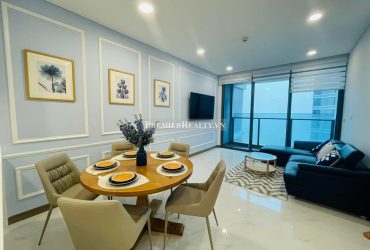
Sunwah Pearl apartment for rent with 2 bedrooms + 1, extremely large area, modern design, luxurious interior.
90 Nguyen Huu Canh St., Ward 22, Binh Thanh Dist., HCMC.
| 104 m2 | 2+1 Bed(s) | 2 Bath(s) |
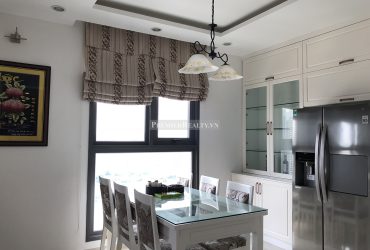
Urgent lease Pearl Plaza 3BR apartment with very reasonable rental, views of cool swimming pool, airy Saigon River, large area, prime location
561A Dien Bien Phu Street, Ward 25, Binh Thanh District, Ho Chi Minh City
| 122 m2 | 3 Bed(s) | 2 Bath(s) |
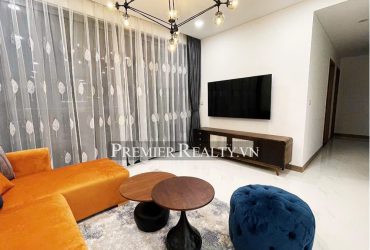
Explore right now Sunwah Pearl 3BRs with very good rental, views of airy river, modern Thu Thiem, minimal design
90 Nguyen Huu Canh St., Ward 22, Binh Thanh Dist., HCMC.
| 123 m2 | 3 Bed(s) | 2 Bath(s) |




 Website belongs to